In 1860, a newly appointed committee determined that University Parks should become both a curated arboretum and a recreational haven for the University. What followed was a story of ambitious grand designs, tight budgets, and an evolving landscape.
The rejected grand design (1860 - 1864)
In 1862, backed by a generous bequest from Lord Hyde, the committee commissioned renowned horticulturalist James Bateman to produce a master plan for the estate.
Bateman was a frequent visitor to Oxford Botanic Garden while a student at Magdalen College and his own garden laid out in the 1850s at Biddulph Grange in Staffordshire had a decisive impact on Victorian Garden design. His garden is now a popular National Trust site.
Bateman envisioned an ambitious layout for the Parks, featuring two Cricket Grounds with a Cricket House, a two-and-a-half-acre stretch of ornamental water and a circular walk around the boundary of the Parks. It also included a bridge over the River Cherwell and a grand tree-lined avenue connecting the new University museum with the rest of the Parks.
Although the design received the full support of the delegates, objections were made on the grounds of cost, which was estimated at £9,475. Critics also argued the layout was too restrictive for cricket, while others feared the ornamental lake would become stagnant. Disheartened, the delegates were discharged of their duties in January 1864.
Planting the foundations
Following this, The Vice Chancellor and two persons nominated by the Delegates of Estates were placed in charge of the Parks. Rather than enforcing a rigid master design, they established a simple perimeter pathway, allowing the Parks to develop organically as Oxford grew.
In June 1865, £500 was allocated from the University Chest for specimen trees, with the first exotic varieties planted that autumn. While few of those original 1865 specimens survive today, this decision sparked decades of botanical growth:
- 1888, 1920s & 1950s: Major waves of landmark tree planting were carried out across the estate.
- 1977 to Present: Continuous planting initiatives have expanded the collection to over 1,600 trees today, ensuring a thriving canopy for future generations.
Planting the foundations
Following this, The Vice Chancellor and two persons nominated by the Delegates of Estates were placed in charge of the Parks. Rather than enforcing a rigid master design, they established a simple perimeter pathway, allowing the Parks to develop organically as Oxford grew.
In June 1865, £500 was allocated from the University Chest for specimen trees, with the first exotic varieties planted that autumn. While few of those original 1865 specimens survive today, this decision sparked decades of botanical growth.
- 1888, 1920s & 1950s: Major waves of landmark tree planting were carried out across the estate.
- 1977 to Present: Continuous planting initiatives have expanded the collection to over 1,600 trees today, ensuring a thriving canopy for future generations.
How the Parks are managed
Governance was formally restructured by University Decree in 1873, creating a body of five Curators of the University Parks, including the Vice-Chancellor. The University Proctors joined the board in 1892.
Today, strategic oversight remains with ten Parks Curators, all of whom are academic faculty members of the University.
The Parks team today
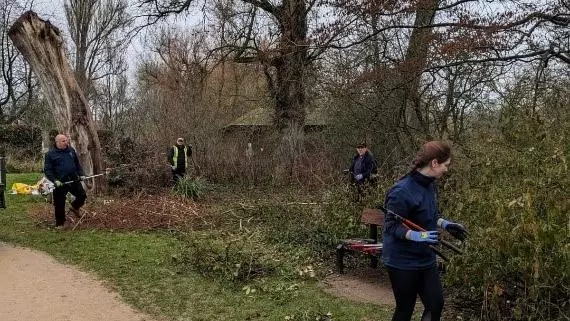
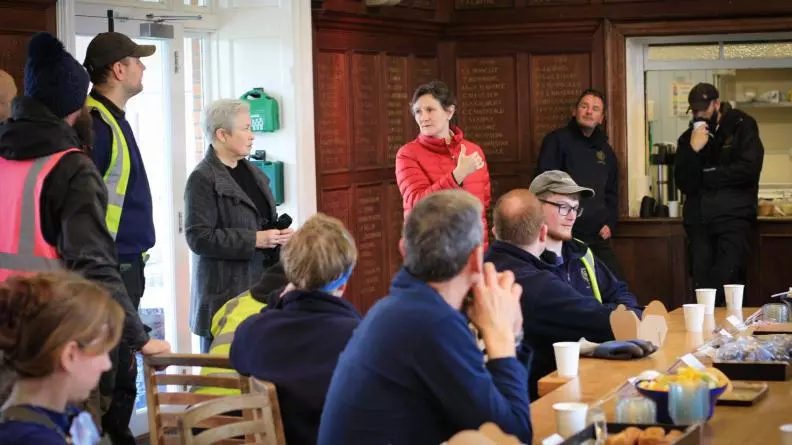
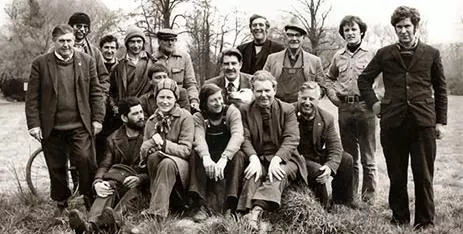
Today there are ten Parks Curators, all faculty members of the University. Day-to-day operations are led by the Superintendent and a skilled team of gardeners and arborists based at the Tentorium. Beyond preserving the 70-acre main estate, the team’s work reaches across the city – maintaining the grounds of most University departments, managing several college sites, and delivering specialist horticultural contracts.