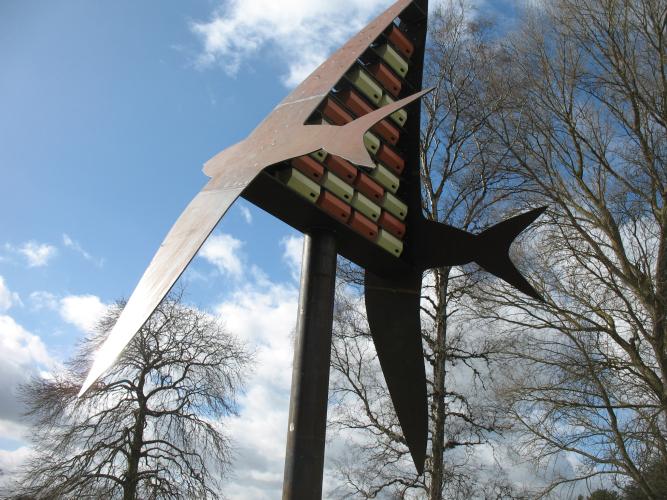
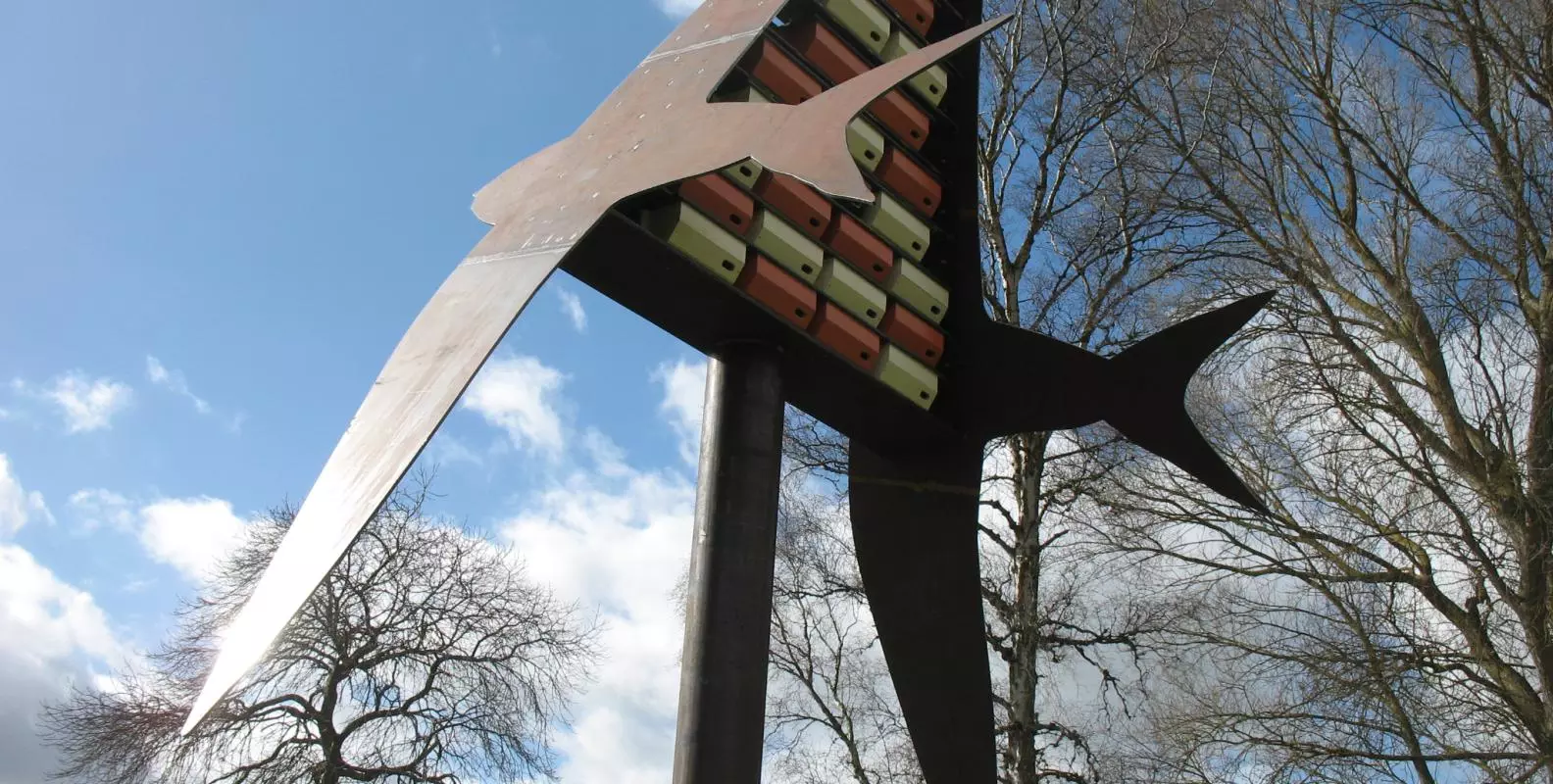
Positioned quietly near the pond in University Parks stands a unique steel structure - equal parts contemporary sculpture and vital conservation refuge. Installed in March 2019, the Swift Tower provides 25 purpose-built nest boxes designed to safeguard one of Oxford's most iconic and threatened summer visitors: the common swift.
Where to find it:
Located on the grassy banks near the central pond in University Parks.
Best time to visit:
Visit between May and August, when swifts return from Africa to breed. On warm summer afternoons and evenings, look up to see them swooping overhead at high speeds.
Get involved:
You can support swift conservation across Oxford by taking part in local summer bird surveys or installing swift nest bricks in your garden.
The story behind the design
The tower is the result of a public design competition launched in May 2017 by the Oxford Swift City project – an initiative funded by the Heritage Lottery Fund and led by the RSPB to help halt the steep decline of swifts across the city.
Selected by a panel of judges and voted for by the local community, the winning design was created by Jonathan Wheeler from Lower Radley, near Abingdon. Inspired by the acrobatic flight of the birds, Wheeler’s sculpture uses graceful steel curves to mirror the dynamic aerial movements of swifts as they soar overhead. The result is an inspiring, functional piece of art for visitors to enjoy.
Jonathan Wheeler, DesignerI tried to convey the sweeping, curving shape of swifts in my design and hope it will be a pleasing sculptural form in the park as well as a safe haven for swifts in the city.
Why swifts need our help
Swifts arrive in Oxford each May after an extraordinary migration from Africa, spending almost their entire lives on the wing. These exceptional birds are facing a decline - between 1995 and 2015, the UK’s breeding swift population dropped by 51%. As old buildings across the city are renovated and roof spaces sealed, traditional nesting sites beneath eaves and tiles are rapidly disappearing.
The Swift Tower forms a core part of the University’s wider Biodiversity Strategy. By offering dedicated, safe nesting chambers high above the ground, it helps ensure that swifts returning to Oxford year after year have a permanent place to raise their young.
Oxford’s living swift legacy
Oxford has a long and celebrated history of swift research and conservation. Just a short walk from the Parks, the Oxford University Museum of Natural History has hosted nesting swifts in its tower ventilation shafts for generations. Since 1946, that colony has been studied continuously, forming one of the longest-running avian research studies in the world.

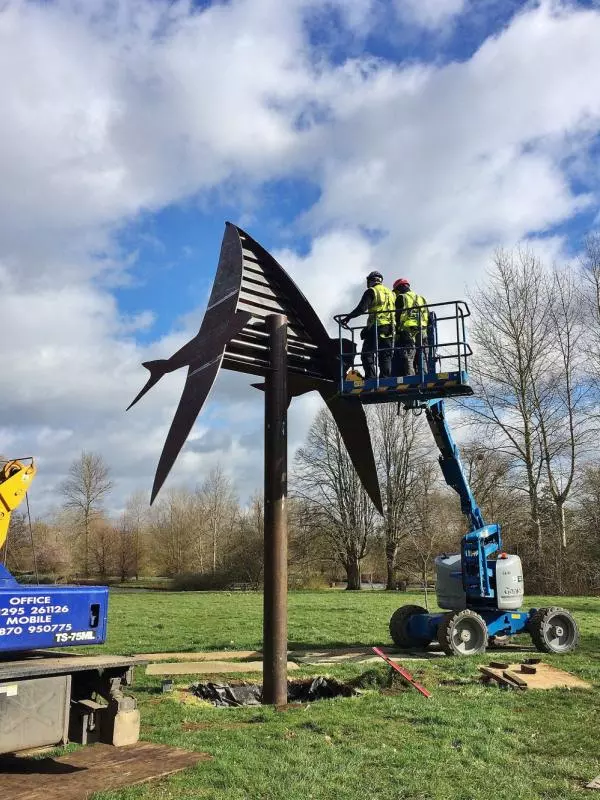
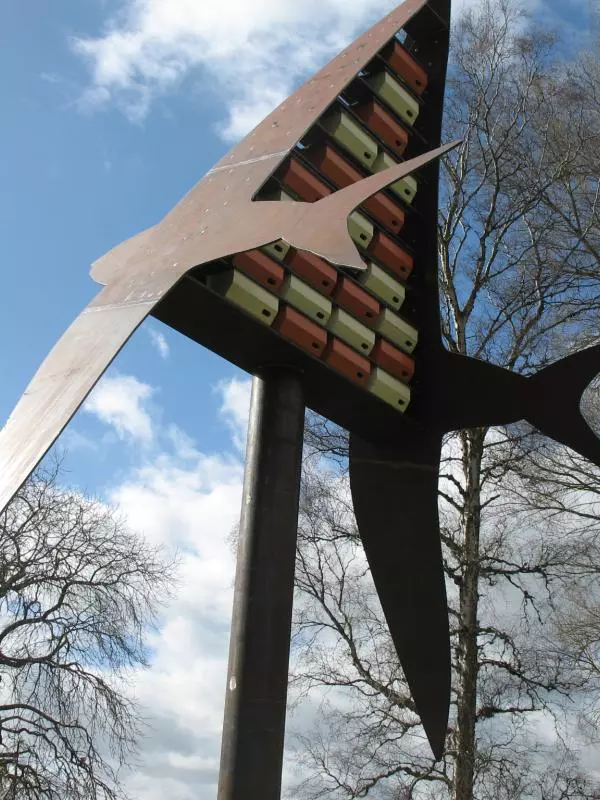
In 2019, Oxford's first Swift Tower was installed near the University Parks' pond. The structure contains 25 nest boxes for endangered swifts, and is based on the outcome of a public design competition run by the Oxford Swift City project, with the winning entry coming from Jonathan Wheeler of Lower Radley.
The tower received planning permission in late 2018 and will help advance the University's efforts to deliver its Biodiversity Strategy by providing much needed nesting space for swifts. These beloved birds are in long-term decline throughout much of Britain, with their numbers falling by more than half between 1995 and 2015, partly because of the increasing scarcity of suitable nesting sites.