The buildings of the University Parks reflect over a century of service, sport, and design.
Discover the historic structures tucked across our 70-acre estate – from Sir Thomas Jackson's iconic 1881 Cricket Pavilion to the charming 19th-century South Lodge and the team's working base at the Tentorium.
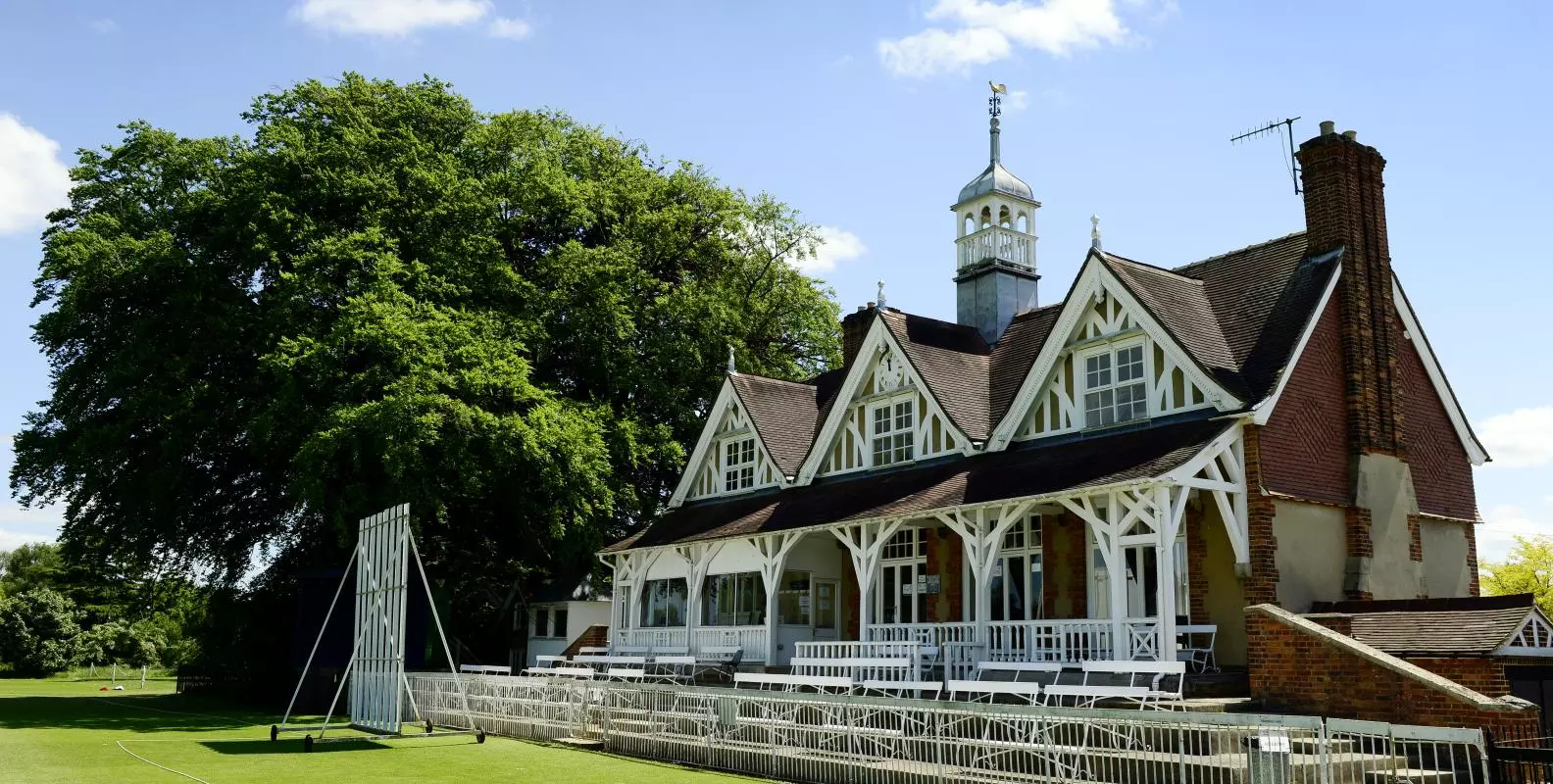
Cricket Pavillion
The Parks' Cricket Pavilion, completed in 1881, was designed by Sir Thomas Jackson. Jackson was one of the most distinguished architects of his generation. His other designs include the University's Examination Schools and the iconic Bridge of Sighs over New College Lane.
University cricket has been played in the Parks since 1881. It is the only first-class cricket ground in the UK where spectators can watch free of charge. The Pavilion is sited at the same distance from the wicket as the Pavilion is at Lord's.
South Lodge
South Lodge was specifically constructed in 1893, at a 'cost to not exceed £500', to house the University Parks Superintendent. The Superintendent at this time was Mr Henry Mount, the third Superintendent, who managed the Parks between 1892 and 1919.
Designed by a Mr Drinkwater, South Lodge was built in the beautiful setting of a lime tree avenue which stretched right up South Parks Road (then no more than a cart track) to the site of another Lodge which housed the Keeper of the University Museum. This Lodge was later demolished to make way for the Radcliffe Science Library. The outer line of these trees still survives along the north side of South Parks Road.
The Tentorium
This is the operational and administrative centre for the University Parks team. It was built in 2002 to a design by Gray, Baines & Shew.